


Description
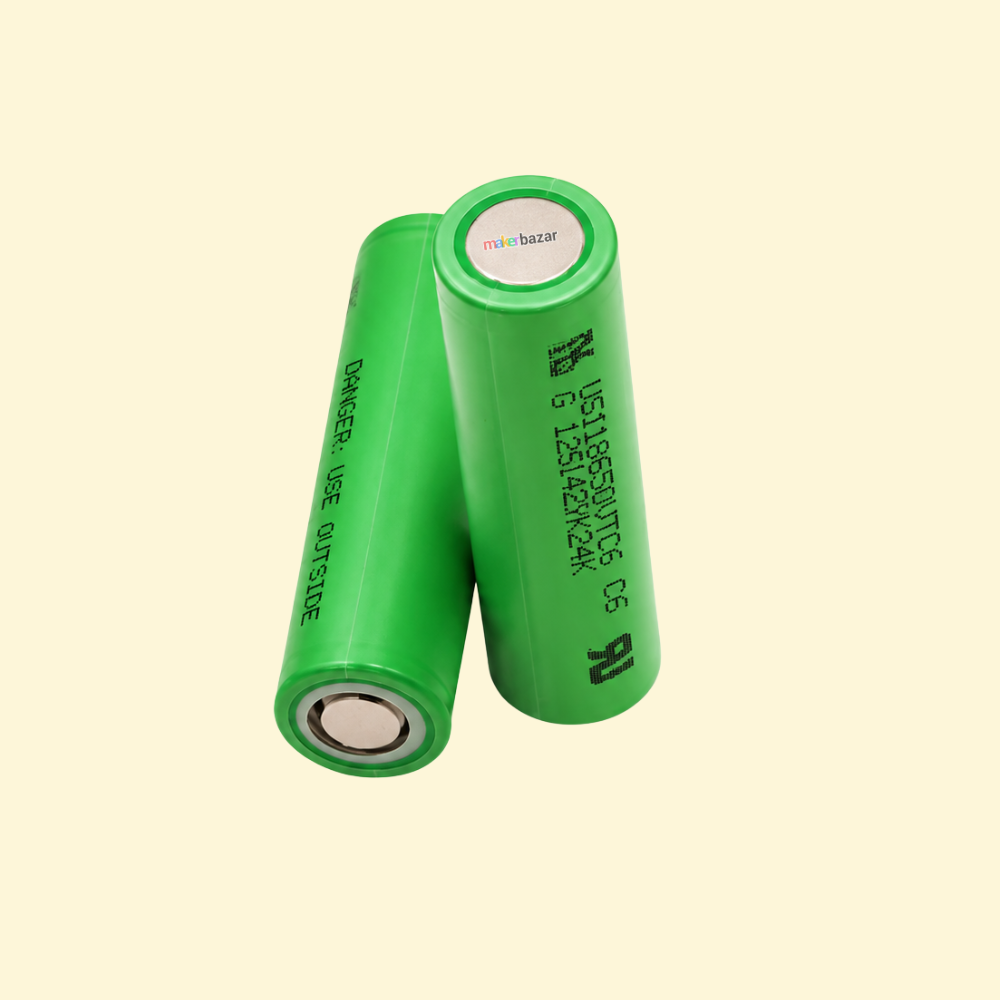
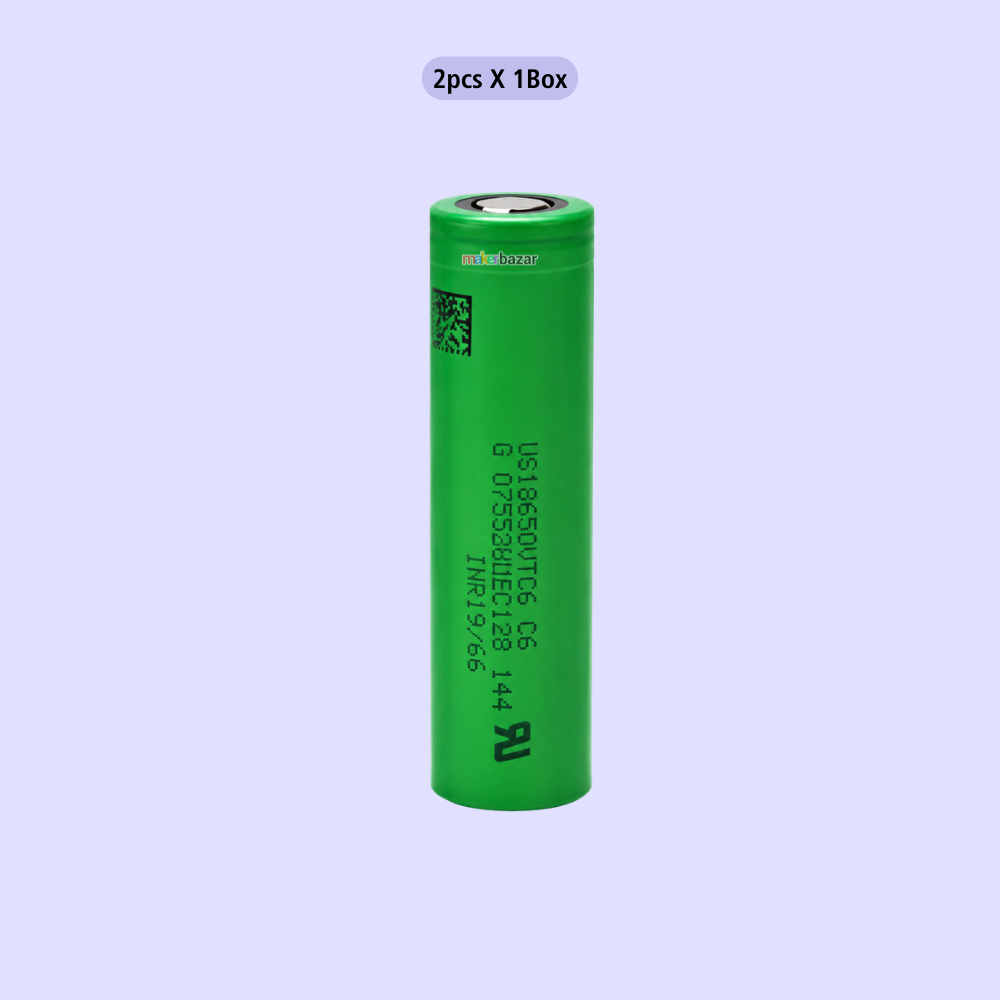
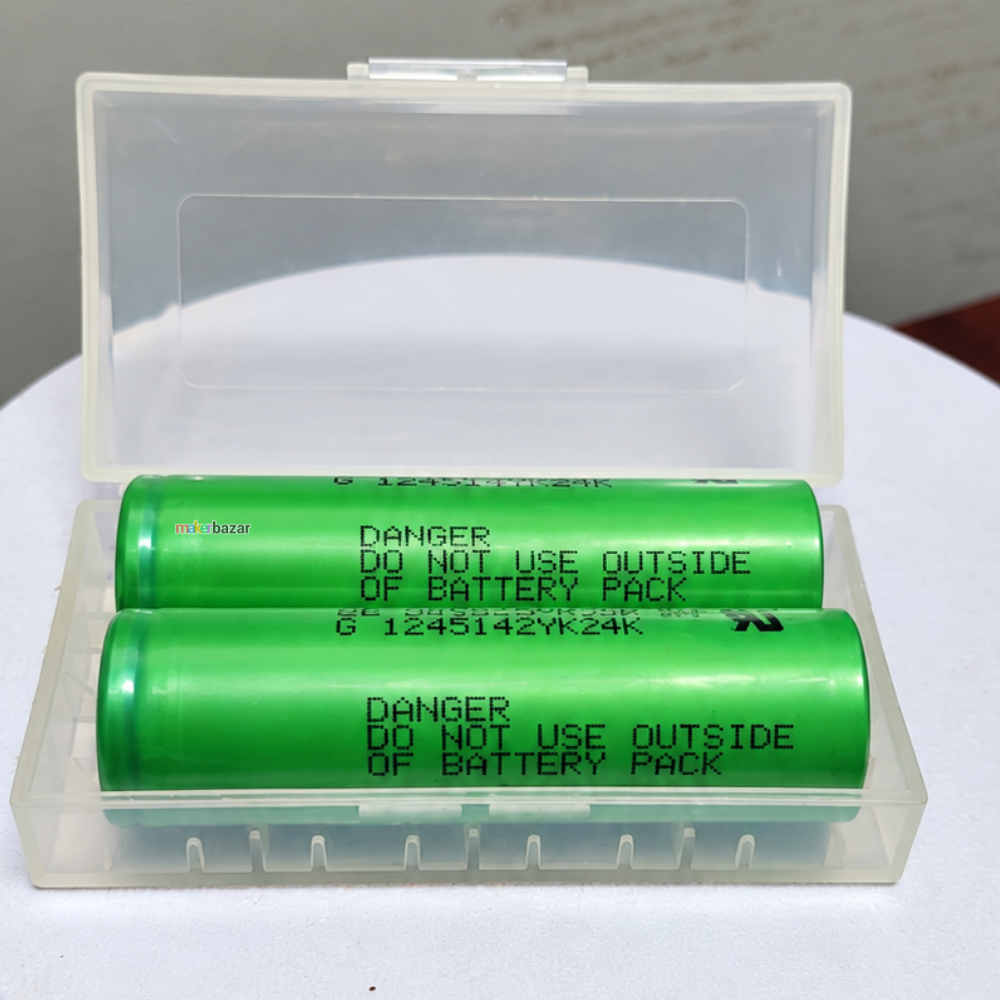
Sony US18650 3.7V 3000mAh Li-ion Rechargeable Battery Cell with Box
The Sony US18650 3.7V Li-ion Rechargeable Battery Cell is a rechargeable 18650 lithium-ion cell designed for high-drain applications and DIY electronics projects. It offers a 3000mAh capacity with a nominal voltage of 3.6V–3.7V and a maximum continuous discharge rating of up to 30A, when used with appropriate temperature control.
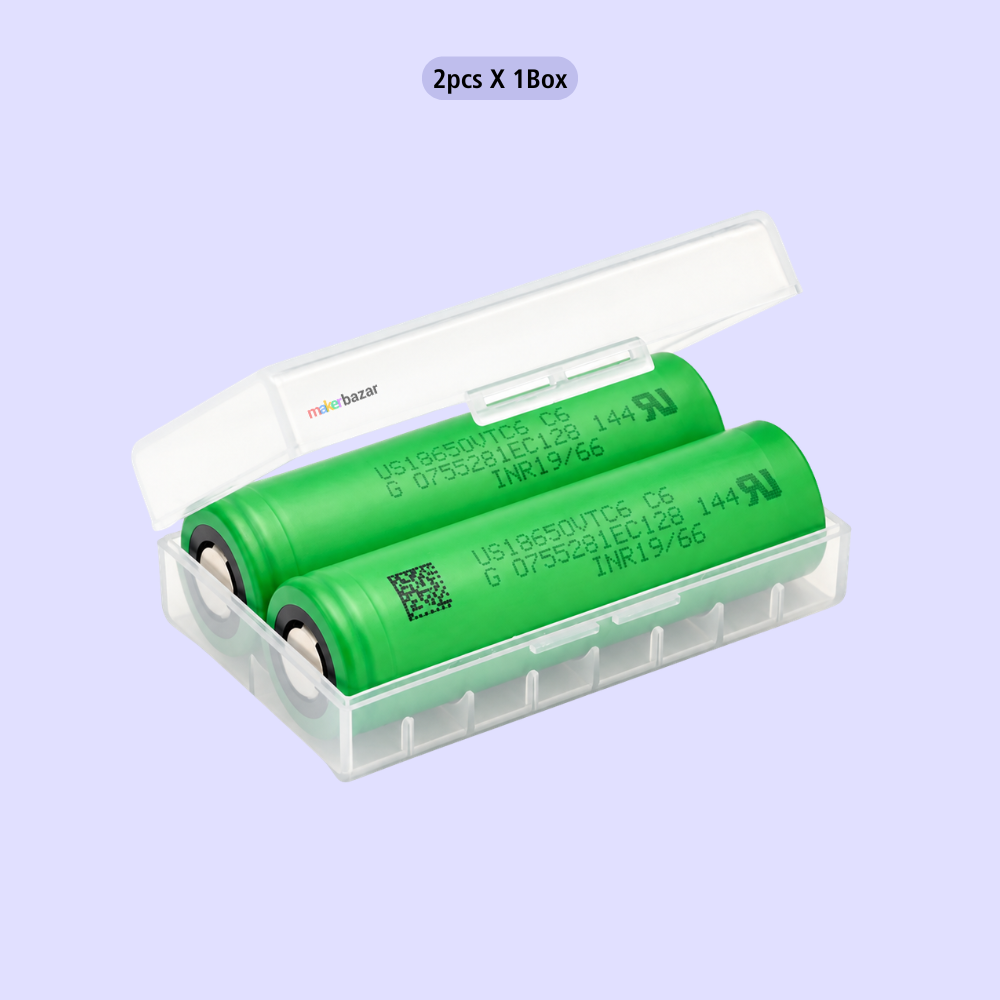
The battery comes with a plastic storage box for convenient storage and transport. It is suitable for applications such as power tools, robotics, flashlights, battery packs and other compatible electronic devices.
Key Features
- 18650 rechargeable Li-ion battery cell.
- 3000mAh capacity.
- 3.6V–3.7V nominal voltage.
- Up to 30A maximum continuous discharge.
- Suitable for high-drain applications.
- 18650 standard size.
- 18mm × 65mm approximate cell dimensions.
- Unprotected cell.
- Comes with plastic storage box.
- Suitable for DIY electronics and battery-pack projects.
- Useful for robotics, flashlights and power tools.
Technical Specifications
| Specification | Details |
|---|---|
| Battery Type | Rechargeable Li-ion |
| Model | US18650 |
| Cell Size | 18650 |
| Capacity | 3000mAh |
| Nominal Voltage | 3.6V–3.7V |
| Maximum Continuous Discharge | Up to 30A* |
| Cell Dimensions | Approx. 18mm × 65mm |
| Protection | Unprotected |
| Package | Plastic Storage Box |
| Quantity | 2 Cells |
| Branding Note | Cell does not contain Sony/Murata text |
Applications
- Power tools.
- Robotics projects.
- Flashlights.
- DIY electronics.
- Battery pack assembly.
- Portable electronic devices.
- High-drain applications.
- Custom Li-ion battery projects.
Precautions
- Unprotected cell: Use with a suitable BMS/protection system where required.
- Use only a charger specifically designed for Li-ion 18650 cells.
- Do not short-circuit the battery.
- Do not overcharge or deeply discharge the cell.
- Do not expose the cell to excessive heat, fire or direct sunlight.
- Do not use a damaged, swollen or leaking battery.
- Avoid crushing, puncturing or physically damaging the cell.
- Use appropriate insulation and protection when assembling battery packs.
- Keep away from metal objects that could cause accidental short circuits.
- Store and transport the cell safely in the supplied plastic box.
You may also like
Recently viewed
Good cell of 18650 ...but i am not sure about discharge current...
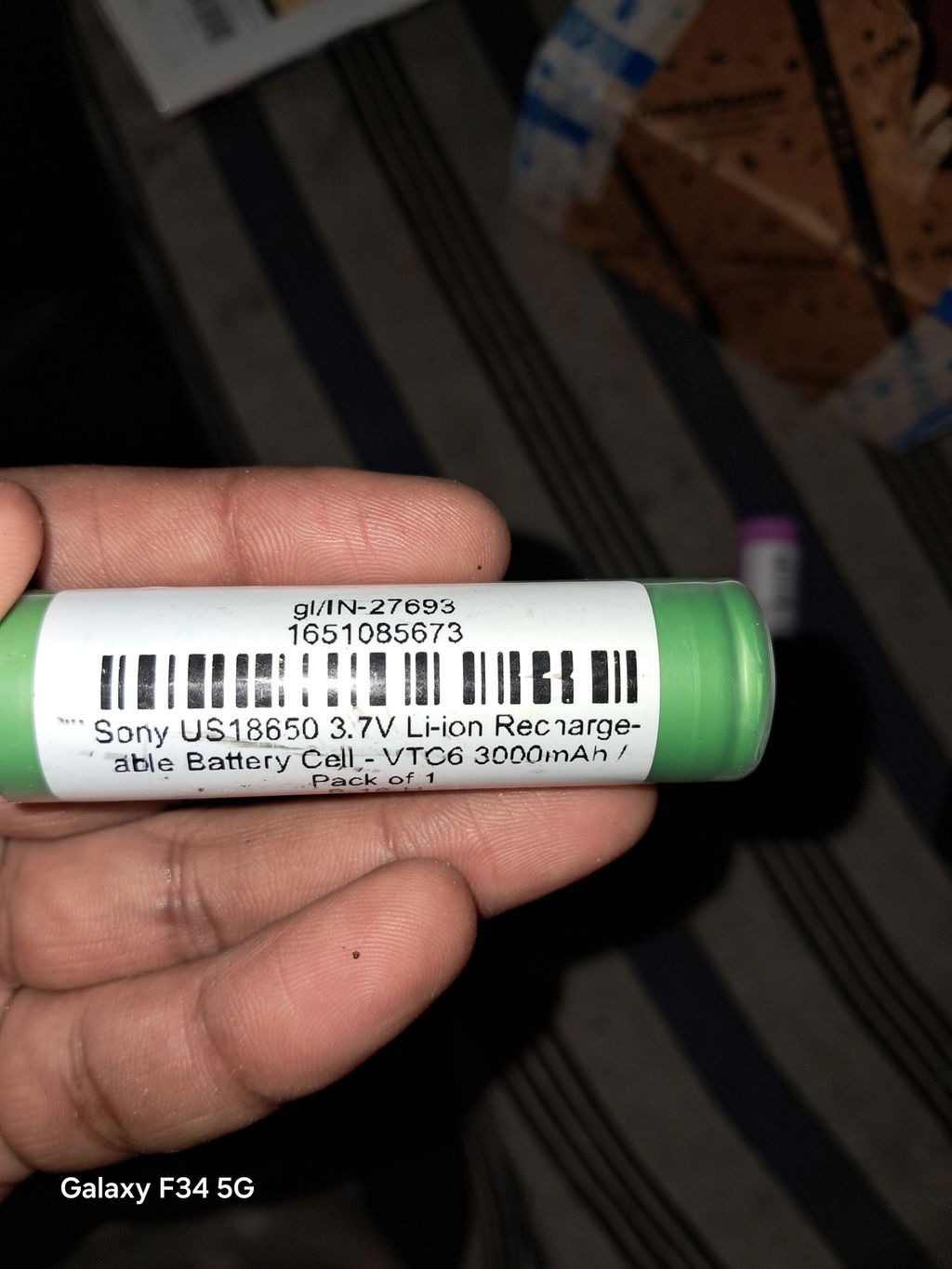
After purchasing this battery, I had doubts about its capacity, so I tested it. Although it is labeled as 3000 mAh, my tests -discharging it from 4.2V down to 3V-yielded a result of 2630 mAh. It is possible to extract the full rated capacity if discharged down to 2.5V, but based on my testing, this was the result I obtained. I also have doubts about its authenticity; it seems 75% genuine and 25% like a local/replica product, though overall, it performed reasonably well.
fake
everything is well copied and I am sure these are fake sony vtc6 don't buy and I bought 4 cells and i got 2 different positive pinout batteries 2 have 3pin and another 2 have 4pin , just don't buy if you are making high power machine
battery 🔋 sufficient power nhi de pa raha hai mera bluetooth module ko
sound badhane par low battery batata hai aur isi karan se thoda disappoint hun
Guys this is a Fake Battery not Orginal from the Sony. but battery backup is good normal
Capacity seems to be real. no heating even used on convoy c8 plus flashlight. high.mode takes max 5Amps . But don't know if real new VTC6, may be used or counterfait. god knows
Good
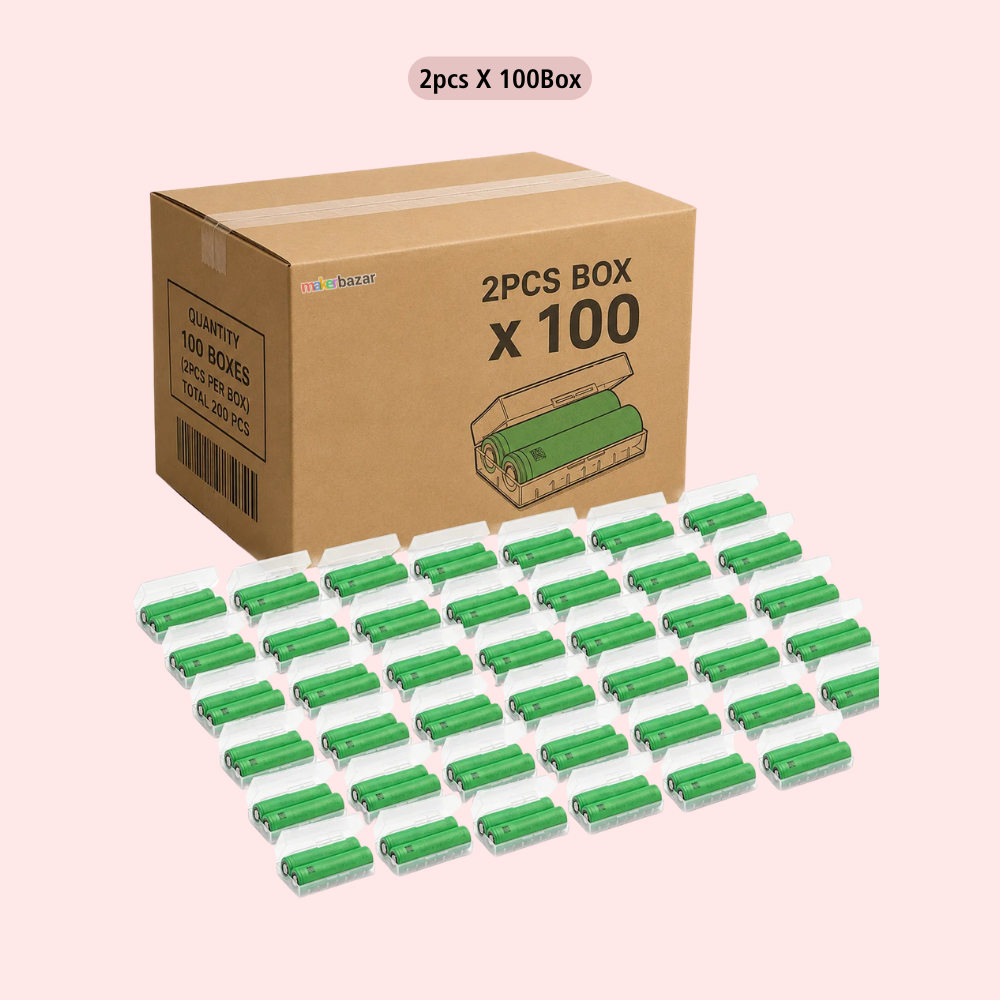
pack of battery